How Should a Business Respond to a Bad Review? A Practical Guide That Builds Trust
A single negative review rarely damages a business. A poor response often does.
Most customers don’t decide whether to contact a business by reading only the five-star reviews. They read the one-, two-, and three-star reviews to see how the business handles criticism. Your response becomes part of your public reputation, often carrying as much weight as the review itself.
Quick Answer
A business should respond to a bad review within a few days, acknowledge the customer’s concern, accept responsibility where appropriate, correct factual inaccuracies professionally, and invite the customer to continue the conversation privately.
The response is not written to convince the unhappy reviewer. It is written for every future customer who will read it before deciding whether to trust your business.
Why Review Responses Matter
Every review creates two audiences:
- The customer who wrote it.
- Future customers researching your business.
The first audience may never change its opinion. The second audience is still deciding whether to contact you.
A calm, professional response demonstrates accountability, transparency, and customer service. An argumentative or defensive reply suggests that similar problems could happen again.
This is why responding thoughtfully is primarily a reputation management strategy rather than simply a customer service task.
Decision Criteria: Should You Respond?
Use this simple framework before replying.
If the review is genuine
✓ Respond publicly.
✓ Acknowledge the concern.
✓ Offer to resolve the issue privately.
If the review contains factual errors
✓ Correct the misinformation once.
✓ Stay polite.
✓ Avoid lengthy explanations.
If the review violates Google’s review policies
Examples include:
- Spam
- Fake reviews
- Reviews for the wrong business
- Competitor attacks
- Off-topic political comments
Report the review while posting a professional public response. Removal requests may take time and are not always successful.
Step-by-Step Process for Responding to a Bad Review
Step 1: Respond Promptly
Aim to respond within a few days.
Quick responses demonstrate that the business actively monitors customer feedback. Waiting several weeks may suggest the business is inattentive.
Avoid replying while emotional. If you’re frustrated, write a draft, leave it overnight, shorten it, and then publish it.
Step 2: Acknowledge the Specific Concern
Avoid generic phrases like:
“We’re sorry you had a bad experience.”
Instead, reference the actual issue.
For example:
“Thank you for sharing your experience regarding the delayed appointment.”
Specific responses show that a real person read the review.
Step 3: Accept Responsibility Where Appropriate
If your business made a mistake, admit it clearly.
Example:
“We missed the scheduled appointment window, and that’s our responsibility.”
Customers generally forgive mistakes more readily than excuses.
Avoid blaming employees, suppliers, or other customers.
Step 4: Correct Factual Errors Professionally
Some reviews contain inaccurate information.
Correct mistakes without arguing.
Instead of writing:
“You’re completely wrong.”
Write:
“Our records show the quoted price included those parts, but we’d be happy to review everything with you.”
State the facts once and move on.
Long debates rarely improve public perception.
Step 5: Continue the Conversation Offline
Never try to resolve complex disputes inside a public review.
Invite the customer to speak directly with a named contact.
For example:
“Please contact Sarah, our customer service manager, so we can understand what happened and work toward a solution.”
Providing a real name feels more personal than saying “contact customer support.”
A Simple Review Response Formula
A strong response usually follows four steps:
- Thank the reviewer.
- Acknowledge the specific issue.
- Accept responsibility or clarify facts professionally.
- Invite further discussion privately.
Keeping this structure consistent creates responses that feel authentic without sounding scripted.
Example of a Good Review Response
Customer Review
“The technician arrived an hour late and the repair cost much more than expected.”
Business Response
“Thank you for your feedback. We’re sorry we missed the scheduled arrival window. We understand how frustrating delays can be. Our records show the estimate included the repair costs, but we’d be happy to review the invoice with you. Please contact David directly so we can discuss your experience and make things right.”
The response is respectful, concise, and solution-focused.
What Makes a Review Response Worse?
Certain mistakes create more damage than the original review.
Avoid:
- Arguing with the customer.
- Questioning their honesty publicly.
- Revealing personal information.
- Sharing transaction details.
- Blaming employees by name.
- Copying and pasting identical responses.
- Writing lengthy explanations.
- Responding while angry.
Future customers judge professionalism, not who “won” the argument.
Handling Fake or Unfair Reviews
Not every negative review is legitimate.
If you believe the review violates Google’s policies, report it through your Google Business Profile.
While waiting for Google’s decision, post a calm public response.
Example:
“We have been unable to locate any record matching the information provided. We take customer concerns seriously and have reported this review for further review. If this relates to a genuine experience, we’d appreciate the opportunity to discuss it directly.”
This protects your reputation regardless of whether the review is removed.
Industry Exceptions
Some industries require extra care because of privacy obligations.
Healthcare
Never confirm someone is a patient.
Legal Services
Avoid discussing case details publicly.
Financial Services
Do not reveal account information or transaction history.
Professional Services
Keep responses general and move conversations offline quickly.
When privacy laws or professional ethics apply, protecting confidential information is more important than defending your business publicly.
Do Review Responses Improve Local SEO?
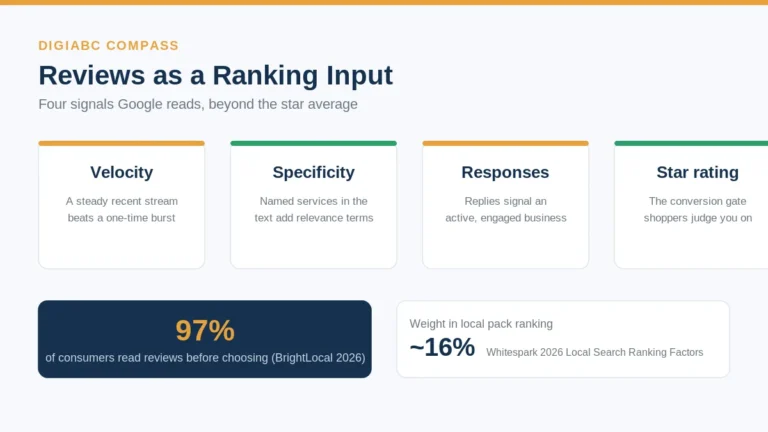
Google encourages businesses to respond to customer reviews because active engagement improves the overall customer experience.
However, there is no confirmed evidence that replying to reviews directly improves Google rankings.
The strongest benefit is increased trust and higher conversion rates.
Businesses that actively manage reviews often provide better customer experiences, receive more genuine feedback, and maintain healthier Google Business Profiles. Those broader improvements may support stronger local visibility over time, but they should be viewed as indirect benefits rather than direct ranking factors.
Respond because it builds credibility—not because it guarantees higher rankings.
Turn Bad Reviews into Business Improvements
Negative reviews are more than reputation signals—they are operational feedback.
Look for recurring themes such as:
- Missed appointments
- Slow response times
- Unexpected pricing
- Poor communication
- Long waiting times
If the same complaint appears repeatedly, the issue is likely within the business rather than with individual customers.
Maintain a simple quarterly log of recurring complaints. Fixing the underlying process often improves customer satisfaction, review quality, and long-term reputation more effectively than writing better responses.
Frequently Asked Questions
Should I respond to every bad review?
Yes. Every negative or mixed review deserves a professional response. Consistent engagement demonstrates accountability.
Should I respond to positive reviews?
Yes. Even a short, personalized thank-you reinforces customer relationships and shows future readers that you value feedback.
Can I remove honest negative reviews?
Generally, no. Honest opinions are usually allowed under Google’s review policies. Only reviews that violate Google’s policies should be reported.
Can a business sue over a bad review?
Honest opinions are generally protected. Defamation usually requires false statements presented as fact. If a review contains serious false allegations, seek legal advice before taking action.
Review Response Checklist
Before publishing your response, ask yourself:
- Did I respond within a reasonable time?
- Did I acknowledge the customer’s specific concern?
- Did I accept responsibility where appropriate?
- Did I avoid arguing or becoming defensive?
- Did I protect the customer’s privacy?
- Did I correct factual errors politely?
- Did I invite the customer to continue the discussion privately?
- Is the response concise and professional?
- Would this response build trust with someone reading it for the first time?
If you can answer “yes” to each question, your response is likely helping your reputation rather than hurting it.
Key Takeaway
A bad review is not the end of a customer’s journey—it is the beginning of your public response.
Think of every reply as a conversation with future customers rather than a debate with one unhappy reviewer. Respond promptly, acknowledge the issue, take responsibility where appropriate, correct factual inaccuracies professionally, and continue detailed discussions offline.
Businesses rarely earn trust by being perfect. They earn it by demonstrating professionalism, accountability, and a genuine commitment to improving the customer experience whenever something goes wrong.