6 Best Places to Visit in Munsiyari in 2026 (Little Kashmir of India)
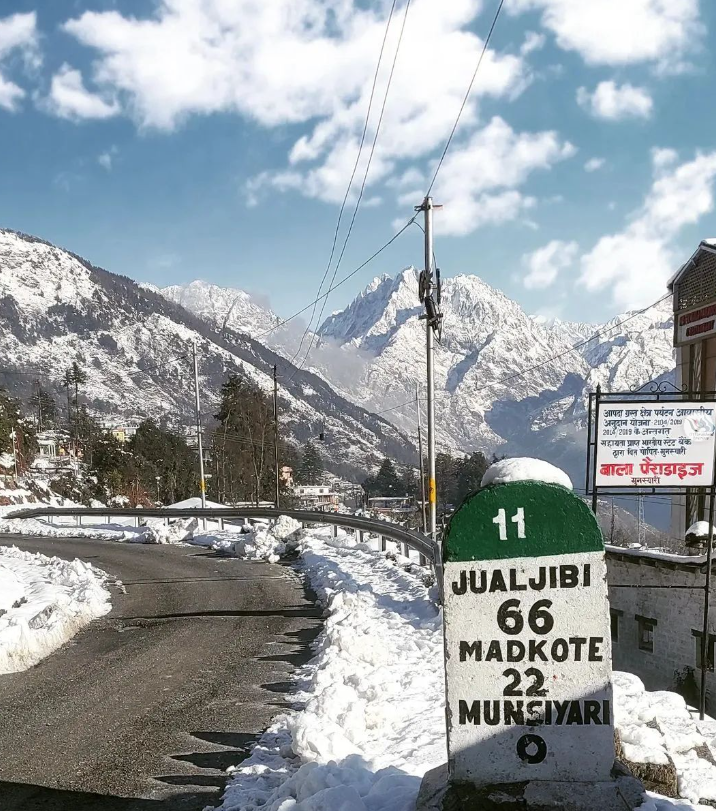
Munsiyari is a Himalayan hill town in Uttarakhand’s Pithoragarh district, sited at roughly 2,200 metres (7,200 feet) in the eastern Kumaon region near the Nepal and Tibet borders. It is best known for panoramic views of the five-peak Panchachuli range and serves as the trailhead for the Milam, Ralam, and Namik Glacier treks. The six essential stops are Khaliya Top, Birthi Falls, Nanda Devi Temple, Darkot Village, the Tribal Heritage Museum, and the Panchachuli viewpoint itself.
I was born in Madkot, a small village near Munsiyari in Uttarakhand. Growing up in the Kumaon Himalayas, trips to Munsiyari were always special. Even today, every visit brings back memories of watching the first rays of sunlight touch the Panchachuli peaks, walking through quiet mountain roads, and breathing the crisp Himalayan air.
The 6 Best Places to Visit in Munsiyari
1. Khaliya Top
Khaliya Top is one of the most popular attractions in Munsiyari and one of my favourite places to visit. The trek passes through dense oak forests, colourful rhododendron trees, open alpine meadows, and peaceful mountain trails before reaching an elevation of about 3,500 metres.
From the top, you’ll see some of the most spectacular Himalayan peaks, including Panchachuli, Nanda Devi, Hardeol, Rajrambha, and Nandakot.
Watching sunrise here is an experience every traveller should have at least once.
Best time to visit: March to June for rhododendrons, September to November for the clearest views. December to February for snow, if the trail is open.
2. Birthi Falls
Located about 32 kilometres before Munsiyari, Birthi Falls is one of the tallest waterfalls in the Kumaon region. Water drops nearly 400 feet into a lush green valley, creating a perfect stop for photography and short walks.
The waterfall is easy to access and is often included while travelling to or from Munsiyari.
Best time to visit: September to June.
3. Nanda Devi Temple
One of Uttarakhand’s older temples, the Nanda Devi Temple sits at around 7,500 feet and is dedicated to the goddess Nanda (a form of Parvati). A gentle 3 km trek from Munsiyari’s main market leads you to the temple, with clear views of the Panchachuli peaks along the way. It’s equal parts spiritual stop and easy acclimatization walk.
Best time to visit: October to May.
4. Darkot Village
Darkot is a traditional Kumaoni village located just a few kilometres from Munsiyari. It is famous for handcrafted woollen products, old wooden homes, and warm local hospitality.
Walking through its narrow lanes gives visitors a chance to experience everyday life in the Himalayas while supporting local artisans.
Best time to visit: Any time of year, though winter roads can be tricky.
5. Tribal Heritage Museum
Set up in 2000 by a local schoolteacher, the Tribal Heritage Museum is a small but fascinating window into the Bhotia tribe and other communities of the region. Inside you’ll find wooden utensils, old furniture, tools, and accessories, including items made from yak hide that tell the story of how people have lived in these mountains for generations.
Timings: 9:00 AM – 5:00 PM.
6. Panchachuli Peaks
The defining image of Munsiyari, the Panchachuli Peaks are a row of five snow-capped summits in eastern Kumaon, rising from 6,334 m (20,781 ft) to 6,904 m (22,651 ft). They form a natural divide between the Gori and Darmaganga river valleys. The name comes from a Mahabharata legend the “five cooking hearths” (chulis) said to have been used by the Pandavas on their final journey. You don’t need to trek to enjoy them; the view from town at sunrise is unforgettable.
The best views can be enjoyed directly from Munsiyari town during sunrise.
Best time to visit: March to June and September to November.
Where Is Munsiyari Located?
Munsiyari is a scenic hill town in the Pithoragarh district of Uttarakhand, located at an altitude of around 2,200 metres (7,200 feet). It lies in the eastern Kumaon region near the borders of Nepal and Tibet and serves as the starting point for several famous Himalayan treks, including the Milam Glacier Trek, Ralam Glacier Trek, and Namik Glacier Trek.
The town is best known for its breathtaking views of the Panchachuli mountain range, making it one of Uttarakhand’s most beautiful offbeat destinations.
How to Reach Munsiyari
Reaching Munsiyari takes time, but the journey is one of the most memorable parts of the trip. The roads pass through dense pine forests, charming mountain villages, deep valleys, rivers, and countless scenic viewpoints. If you enjoy road trips, you’ll find plenty of places to stop for photography and short breaks along the way.
By Road
Munsiyari is well connected by road to Haldwani, Almora, Pithoragarh, and other major towns in Uttarakhand. Shared jeeps, Uttarakhand Transport buses, and private taxis are available from Kathgodam, Haldwani, Almora, and Pithoragarh.
If you’re travelling from Delhi, the road journey is approximately 620-670 km and usually takes 13 to 16 hours, depending on traffic, weather, and road conditions. Since it’s a long drive through the mountains, I recommend breaking the journey with an overnight stay in Almora or Binsar to make the trip more comfortable.
Personally, I enjoy travelling via the Delhi – Halwani to Pithoragarh route. Since I was born in Madkot, a village near Munsiyari, I’ve driven on this route many times. It offers some of the most beautiful views in Kumaon, with winding mountain roads, dense forests, traditional villages, rivers, waterfalls, and panoramic Himalayan landscapes. Every season brings a different charm, making the drive just as memorable as the destination itself.
By Train
The nearest railway station is Kathgodam, about 275 km from Munsiyari. From there, you can hire a private taxi, take a shared jeep, or board a state transport bus to reach Munsiyari.
By Air
The nearest airport is Pantnagar Airport, approximately 313 km away. From the airport, taxis are available to Munsiyari. Many travellers prefer to stay overnight in Haldwani or Almora before continuing the scenic drive into the mountains.
Travel Tip: Avoid driving after sunset if you’re unfamiliar with mountain roads. The final stretch to Munsiyari has narrow roads, sharp bends, and steep climbs. Starting early in the morning makes the journey safer and allows you to enjoy the spectacular Himalayan scenery along the way.
Best Time to Visit Munsiyari
There’s no single “right” time — it depends on what you’re after:
- March to June — pleasant days (roughly 15–25 °C), blooming rhododendrons, and the best window for treks like Khaliya Top.
- September to November — post-monsoon air is crisp and clear, giving the sharpest views of the Panchachuli peaks.
- December to February — cold and often snowbound (temperatures can drop below freezing), perfect if you specifically want to see Munsiyari under snow, but some roads and trails may be closed.
A Few Local Travel Tips
Munsiyari is a trekker’s town, not a resort town expect homestays, small guesthouses, and budget hotels rather than luxury stays, and book ahead in peak season. For food, lean into Kumaoni home cooking: aloo ke gutke, madua (ragi) roti, bhang ki chutney, bhatt ki churkani, and bal mithai are worth seeking out. Carry cash, warm layers (even in summer the nights are cold), and don’t rely on a strong mobile signal. Start sightseeing early too, because the clearest mountain views come in the first few hours of daylight.
Frequently Asked Questions
What is the best time to visit Munsiyari?
March to June brings pleasant days and blooming rhododendrons. September to November gives the crispest air and the sharpest views of the Panchachuli peaks. December to February is snowbound and beautiful, but some roads and trails close.
How do you reach Munsiyari from Delhi?
By road it is roughly 620 to 670 km and takes 13 to 16 hours, so most people break the drive with a night in Almora or Binsar. The nearest railway station is Kathgodam, about 275 km away, and the nearest airport is Pantnagar, about 313 km away.
How many days do you need in Munsiyari?
Two to three days covers the six main stops comfortably, including a day for the Khaliya Top trek. Anything shorter and the long drive in starts to outweigh the time you actually spend there.
Do you have to trek to see the Panchachuli peaks?
No. The best views are from Munsiyari town itself at sunrise. The treks add scale and solitude, but the defining view needs no walking at all.
What is Munsiyari famous for?
The five-peak Panchachuli range, and its role as the trailhead for the Milam, Ralam and Namik Glacier treks. It is often called the Little Kashmir of India for the same reason.
Conclusion
Munsiyari rewards the long journey with something increasingly rare: stillness, scale, and scenery you can’t fake. Whether you’re climbing to Khaliya Top, sitting quietly at the Nanda Devi Temple, or just watching dawn break over the Panchachuli peaks, this little Himalayan town has a way of staying with you. Pick a couple of these spots, take it slow, and let Munsiyari do the rest.