404 vs Soft 404 vs 410: How to Handle Broken and Removed Pages
404s are not a penalty. Learn when to use 404, 410, or a redirect, how to fix soft 404s, and why you should sort broken URLs by referring domains.
404s are not a penalty. Learn when to use 404, 410, or a redirect, how to fix soft 404s, and why you should sort broken URLs by referring domains.
Structured data affects eligibility, not rankings. Learn the three validation standards, the 10 most common errors, and why FAQ and HowTo rich results changed.
Google indexes your mobile page and uses it for all rankings, desktop included. Learn what parity requires and why accordion content is indexed but tap-loaded content is not.
Alt text for accessibility, WebP for weight, and explicit width and height to stop layout shift. Plus the one lazy-loading mistake that wrecks your LCP.
The change, live from August 21, 2026, is that Googlebot’s JSON-LD extractor now performs exactly one round of HTML unescaping on string values inside your structured data. Values that were double-encoded, such as & resolving to &, no longer decode cleanly. Google is aligning its parser with RFC 8259, the JSON specification, which never required HTML entity decoding in…
LiteSpeed Cache has two hundred switches and most should stay put. The settings I change in production, the safe order to enable them, and the two I distrust.
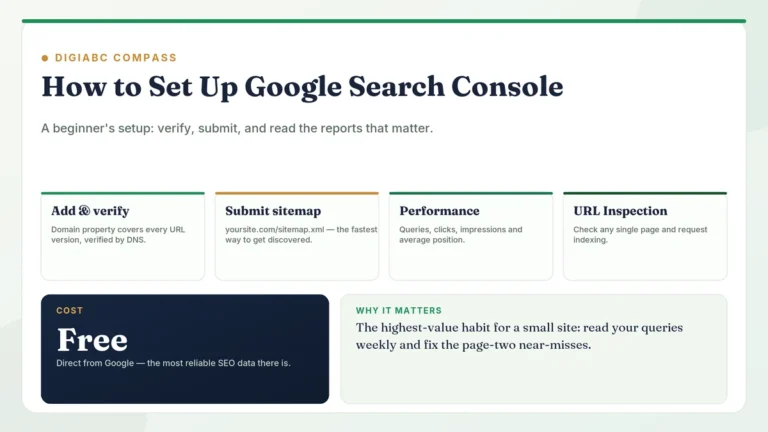
Google Search Console shows how your site performs in search. A step-by-step beginner guide to verifying your site, submitting a sitemap, and reading the key reports.
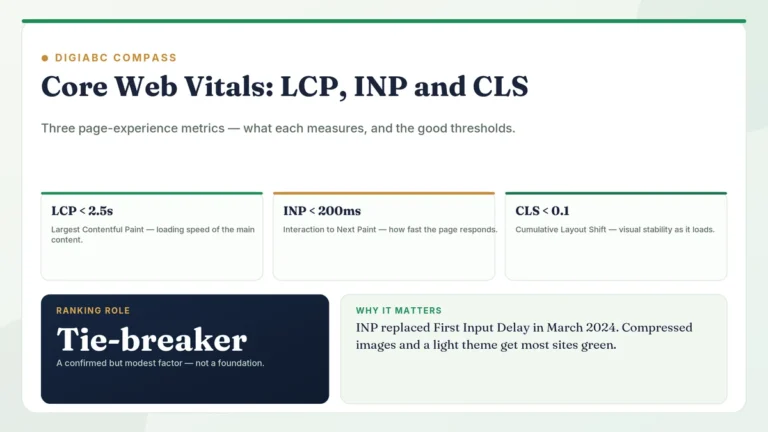
Core Web Vitals are Google’s three page-experience metrics. What LCP, INP, and CLS measure, the targets to hit, and how much they actually affect rankings.
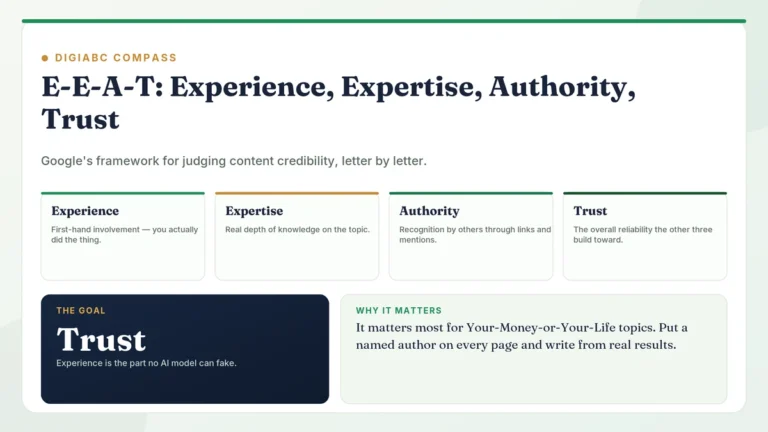
E-E-A-T stands for Experience, Expertise, Authoritativeness, and Trust. What it means, why Google cares, and concrete ways to show it on your site.
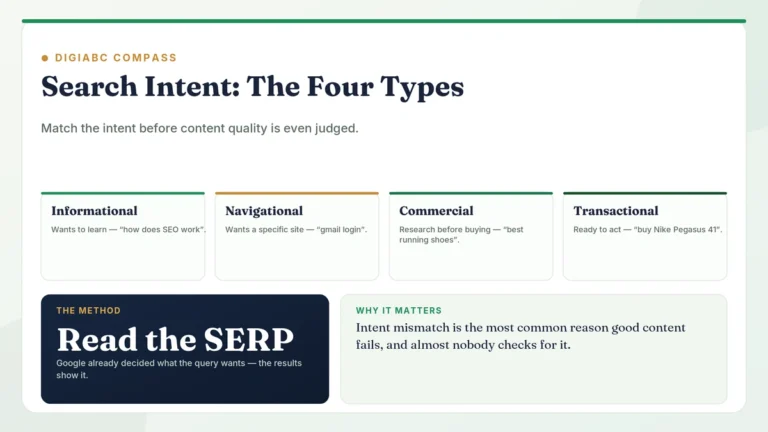
Search intent is the goal behind a query. Learn the four types, how to spot which one a keyword has, and why matching it decides whether you rank.